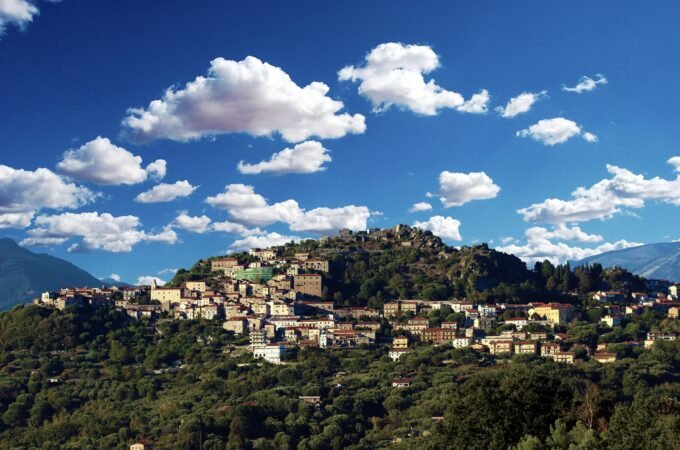
Sorrento, an exceptional tourist destination for family travel
There are places that work better on paper than in real life. They promise rest, beauty, good food, and activities for everyone, but once you arrive, the uncomfortable transfers, endless queues, inflated prices, and that feeling of being trapped inside a tourist set begin to show. Sorrento belongs to a different league. It has the obvious charm of southern Italy, with its light over the sea and its streets perched above the Gulf of Naples, but it also offers something less flashy and far more valuable when traveling with children: it is easy to live in.
And on a family holiday, that matters much more than tourist propaganda usually admits. It matters to be able to go out for a walk without turning every outing into a logistical operation. It matters to sit down for a meal without fearing that everything will be uncomfortable or excessive. It matters that adults feel they are in a place with character, while children do not start an open war against the trip by the second day. Sorrento has that rare ability to satisfy different kinds of travelers without seeming like a destination manufactured for anyone in particular.
A welcoming town, the kind you can explore without tension
One of the first things you notice upon arrival is its scale. Sorrento does not overwhelm. It does not force you to study maps anxiously or combine public transport, taxis, and endless walks. The center can be explored on foot, distances are reasonable, and there is a natural continuity between shopping streets, squares, terraces, and viewpoints. For a family, that means something very concrete: less pointless exhaustion.
Traveling with children changes the way space is perceived. A place that may feel picturesque for a couple can become draining for a family if everything is far away or if every outing requires too much planning. Here, the opposite happens. You can walk down to the center, stop for an ice cream, browse a shop, continue toward a view over the Gulf of Naples, and end the outing without the day feeling like a test of endurance.
That rhythm helps the trip flow more naturally. There is no need to fill every hour with rigid plans. Sometimes it is enough to walk a little, sit in a square, and let the place do the work.
The sea, the strolls, and that Italian way of filling the day
In Sorrento, the sea is always present, even when you are not standing on a beach. It appears from balconies, terraces, in the late afternoon light, and from the spots where the outline of Mount Vesuvius can be seen in the distance. This is not a beach destination in the classic sense, with huge sandy shores and miles of umbrellas. The relationship with the coast here is different, more vertical, more tied to platforms, small access points, and piers.
That can come as a surprise at first, but it is also part of the town’s identity. Many families discover that the appeal of the place does not depend on spending eight straight hours lying beside the water. There are seaside walks, open views, short boat trips, and a constant sense of being in a place from which everything seems close.
In that context, accommodation has a major impact on the experience. When traveling with children, having more space and a certain degree of independence changes the whole tone of the holiday. That is why some travelers look for residential options rather than a classic hotel. In that sense, the reference to a luxurious villa in Sorrento by Eden House fits perfectly, as one of those accommodations that responds to a very specific need: having room, peace, and your own schedule in a highly visited destination.
An excellent base for discovering a great deal without moving every day
Another of Sorrento’s great strengths is its location. There are beautiful destinations that force you to choose between staying still or spending half your life on the road. Here, the opposite is true. From the town, you can organize a range of excursions without turning every outing into a small relocation.
Pompeii is relatively close, and it still has that strange effect of places you feel you already know by heart before seeing them, yet which still manage to impress. Adults feel the weight of history; for children, the idea of a city frozen by a volcano usually has immediate power. Then there is Vesuvius, bringing another landscape, another texture of the land, another kind of conversation.
Then the sea appears as a quick route toward other destinations. Capri, for example, falls within the range of possible day trips, as do several points along the Amalfi Coast. What makes these outings especially interesting is that they allow a change of scenery without giving up the comfort of returning to the same place in the afternoon. On a family trip, that kind of stability matters far more than it may seem.
Eating well, without complicating life
Food supports any journey. In Sorrento, it does so in a remarkably natural way. The local cuisine does not need much explanation to appeal to a family. There is pizza, there is pasta, there are fresh products, fish, tomatoes with real flavor, and citrus fruits that turn up in desserts, drinks, and shop windows. Children usually find something familiar without effort, while adults can eat well without feeling as though they have entered a prefabricated tourist circuit.
Added to this is a certain elasticity in everyday life. Meals stretch out, terraces invite you to stay, and evening strolls are part of the atmosphere. There is a type of holiday that does not depend on grand milestones, but rather on a series of small scenes: a table in the shade, a street sloping toward the sea, a stop to buy something fresh, an afternoon that lasts longer than expected.
That style fits especially well with family travel, because it reduces friction. No one feels they are rushing behind the itinerary.
The best of Sorrento may begin when you stop looking at the guidebook
Many people arrive in Sorrento thinking of a few well-used days. The idea is usually clear: use it as a base, see the essentials, then move on. And yet there is something about the place that unsettles that plan with surprising ease. Not dramatically, but slowly. First, dinner lasts longer. Then an excursion is exchanged for a quiet morning. After that comes the feeling that there is still something left to see, even if you cannot quite say what it is.
That may be why it works so well for traveling with family. Because it does not force anyone to maintain an artificial intensity. Because it allows each person to find their own way of being there. And because, between a boat trip, a walk at sunset, and a square where nothing especially important seems to happen, a rather specific question begins to emerge: if this journey was meant to be a stop along the way, why does it feel as though the real center of the trip had been here from the very beginning?