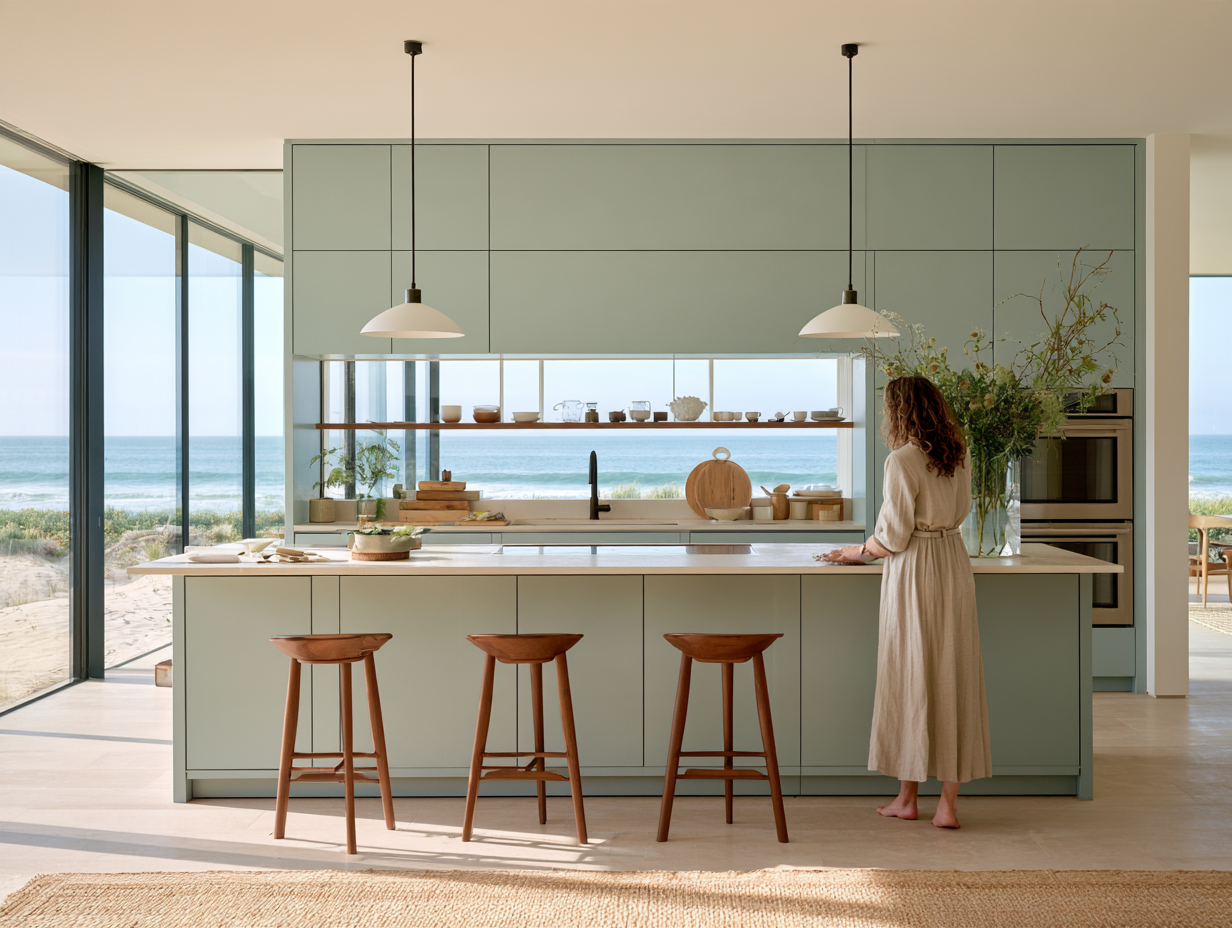
Light Blue Kitchen Cabinets The Unexpected Colors That Make Them Look Even Better
Light blue kitchen cabinets have a rare quality. They bring color into a kitchen without making the room feel loud or busy. They can look fresh in a modern home, charming in a country kitchen, and elegant in a more traditional space.
But the blue itself is only part of the story.
The colors you place around light blue kitchen cabinets can completely change how they look. White and gray are safe choices, but they are not always the most interesting ones. Warm browns, earthy reds, muted greens, and even dark wine shades can bring out details in blue that you may not notice at first.
If you want your blue cabinets to feel more thoughtful and less predictable, these unexpected color combinations are worth exploring.
Why Light Blue Kitchen Cabinets Are So Easy to Work With
Light blue sits in a useful middle ground between a neutral and a bold color.
It is softer than navy and more colorful than white or beige. Because of this, light blue kitchen cabinets can work with many design styles. The final look often depends on the undertone of the blue.
A gray-blue feels cool and modern. Powder blue can feel soft and traditional. A blue with a hint of green often creates a relaxed, natural look.
Before choosing other colors, look at your cabinets during the morning, afternoon, and evening. Natural and artificial light can make the same blue appear very different.
Once you understand the blue, you can start building a richer color palette around it.
1. Terracotta Adds the Warmth Blue Needs
Terracotta and light blue may sound like an unusual pair, but that is exactly why the combination is interesting.
Light blue is naturally cool. Terracotta brings warm orange, brown, and red tones into the room. Together, they create balance.
You do not need to cover the kitchen in terracotta. Try it through floor tiles, plant pots, a backsplash, pottery, or even a few small accessories.
Muted terracotta usually works better than bright orange. Its earthy character makes light blue kitchen cabinets feel warmer and more welcoming.
Natural oak or another warm wood can connect the two colors and make the entire palette feel intentional.
2. Chocolate Brown Makes Pale Blue Feel Richer
Dark brown is often overlooked in modern kitchens, but it can give light blue surprising depth.
Imagine pale blue cabinets next to walnut shelves or a dark brown dining table. The blue suddenly looks lighter and cleaner, while the brown feels rich rather than heavy.
You can introduce chocolate brown with:
- Walnut shelving
- Dark wood stools
- A wooden dining table
- Brown leather seating
- Deep wood flooring
This combination is especially useful when you want light blue cabinets without creating a kitchen that feels too sweet or pastel.
3. Butter Yellow Creates a Soft, Sunny Kitchen
Yellow and blue are a classic combination, but bright yellow can easily overpower pale cabinets.
Butter yellow is different.
It is creamy, warm, and much softer than lemon yellow. Against light blue kitchen cabinets, it can make the room feel sunny even on a cloudy day.
Butter yellow works nicely on walls, small appliances, fabrics, or decorative pieces. Pair the combination with warm white countertops and brass hardware for an inviting finish.
The important part is keeping both colors slightly muted. If the yellow and blue are too bright, the kitchen can begin to feel playful rather than sophisticated.
4. Burgundy Creates an Unexpected Luxury
Burgundy might seem too dramatic for a light blue kitchen, but small amounts can look beautiful.
The contrast works because the colors have very different visual weights. Light blue feels airy, while burgundy feels deep and grounded.
Instead of painting an entire wall burgundy, use it as an accent.
A vintage wine-red rug, burgundy dining chairs, patterned curtains, artwork, or ceramic dishes may be all you need.
Add aged brass hardware, and the combination can give light blue kitchen cabinets a more refined, collected look.
5. Sage Green Makes the Palette Feel Natural
Using blue and green together can make homeowners nervous. In softer shades, however, the combination can be surprisingly peaceful.
Sage green works because it is usually muted with gray. It does not fight with pale blue for attention.
Try light blue cabinets with pale sage walls, warm white countertops, oak flooring, and aged brass hardware.
The result feels connected to nature without turning the kitchen into a strongly themed space.
If you choose this combination, avoid highly saturated greens. Dusty and muted shades usually blend more naturally with light blue.
6. Dusty Rose Softens the Entire Room
Pink does not have to make a kitchen look overly feminine or childish.
Dusty rose contains muted red, pink, and sometimes brown undertones. When placed beside light blue, it creates a soft contrast that feels warmer than the common blue-and-white combination.
Consider dusty rose for seat cushions, artwork, window treatments, pottery, or a small section of wall.
You only need a little.
It works particularly well when light blue kitchen cabinets are paired with cream countertops rather than bright white ones.
7. Charcoal Gives Light Blue a Modern Edge
If warm colors are not your style, go in the opposite direction.
Charcoal can make pale blue feel sharper and more modern. It provides strong contrast without being as harsh as pure black.
Charcoal can appear through countertops, pendant lights, bar stools, flooring, or a dark range hood.
This pairing works especially well in kitchens with plenty of natural light. In a very dark room, too much charcoal may make the space feel smaller, so use it carefully.
8. Warm Cream Can Work Better Than Bright White
Cream may not sound adventurous, but it can make a bigger difference than expected.
Many people automatically choose pure white walls and countertops for light blue cabinets. The problem is that a cold white can sometimes make certain blues look icy.
Warm cream changes that.
Creamy walls, stone countertops, or handmade tiles can soften the blue and make the room feel more comfortable. It is especially effective with brass, oak, terracotta, and other warm materials.
If your light blue kitchen cabinets seem colder than you expected, changing the surrounding white to a warmer off-white may be enough to fix the problem.
Don’t Forget Metal Finishes
Color does not only come from paint.
Cabinet handles, faucets, lighting, and appliances also affect how blue appears.
Brass and aged bronze can warm up light blue, while polished chrome and stainless steel strengthen its cooler side. Matte black creates sharper contrast and can give traditional blue cabinets a more modern appearance.
Think of hardware as part of your color palette rather than a final detail.
The Best Combination Depends on Your Blue
There is no single perfect color for every light blue kitchen.
If your cabinets have cool gray undertones, warm materials such as walnut, terracotta, cream, and brass can prevent the room from feeling cold.
If the blue has warmer or greener undertones, sage, natural wood, charcoal, and creamy neutrals can work beautifully.
Most importantly, test colors next to the actual cabinets. A paint swatch that looks perfect in a store may appear completely different under your kitchen lighting.
Final Thoughts
Light blue kitchen cabinets do not have to live in a world of white walls, gray countertops, and silver hardware.
Some of the most interesting kitchens come from less obvious combinations.
Terracotta can add warmth. Chocolate brown brings depth. Butter yellow creates softness. Burgundy adds drama. Sage feels natural, while dusty rose introduces gentle contrast. Even something as simple as replacing cold white with warm cream can change the entire mood.
The goal is not to find colors that perfectly match your cabinets. It is to find colors that make the blue more interesting.
When the surrounding shades add the right amount of warmth, contrast, and depth, light blue kitchen cabinets can become the feature that brings the whole kitchen together.