Why Black Kitchen Cabinets Make Some Kitchens Look Luxurious and Others Feel Too Dark
Black kitchen cabinets can completely change the mood of a kitchen.
In the right room, they look rich, modern, and custom-made. They can turn simple cabinets into a strong design feature and make ordinary hardware or countertops stand out.
But black cabinets have another side.
Put them in a kitchen with poor lighting, dark floors, and heavy countertops, and the same cabinets can make the entire space feel smaller and gloomy.
So why do black kitchens in design photos often look luxurious while some real kitchens just feel dark?
It usually comes down to balance.
The amount of natural light, countertop color, flooring, wall paint, cabinet finish, and even the size of the room can change how black cabinets look.
Before choosing black for your kitchen, it helps to know what makes the difference.
Black Cabinets Need Light Around Them
Light may be the most important part of designing a kitchen with black cabinets.
Black absorbs more light than white or pale colors. That is one reason it can create such a deep, dramatic appearance. It also means a kitchen filled with black surfaces needs enough light to keep the room comfortable.
Imagine two kitchens with identical black cabinets.
The first has a large window above the sink, glass doors leading outside, and bright ceiling lights.
The second has one small window and weak overhead lighting.
The cabinets may look elegant in the first kitchen and heavy in the second.
Before choosing black kitchen cabinets, pay attention to how much daylight your room receives throughout the day. Do not judge it only at noon when the kitchen is brightest.
Look at it in the morning and evening too.
If natural light is limited, good artificial lighting becomes even more important. Under-cabinet lights can brighten work surfaces, while pendant lights over an island add another useful layer of light.
The goal is not to make every part of the room extremely bright. You simply want enough light to balance the dark cabinetry.
Contrast Is What Often Creates the Luxury
One reason professionally designed black kitchens look so impressive is contrast.
Designers rarely make every surface black.
They give the black something lighter to sit beside.
A white or cream countertop against black cabinets immediately creates separation. The dark cabinetry looks sharper because your eye can clearly see where one surface ends and another begins.
The same idea works with walls and backsplashes.
Consider a kitchen with:
- Black lower cabinets
- Warm white walls
- Light quartz countertops
- A soft white backsplash
- Natural wood flooring
The cabinets become the boldest feature without making the entire room dark.
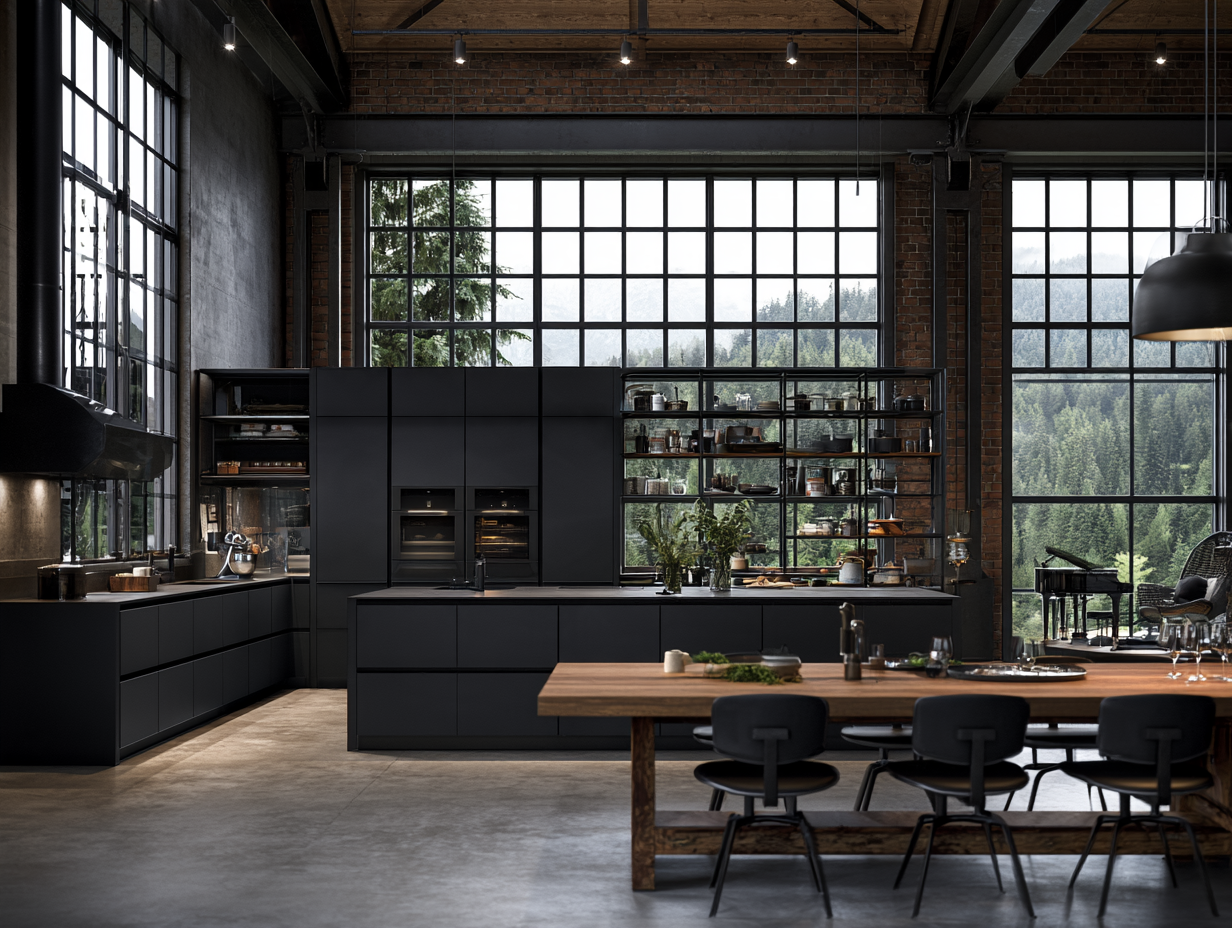
Now imagine black cabinets with a black countertop, charcoal backsplash, dark gray walls, and very dark flooring.
That can work in a large designer kitchen with excellent lighting, but it is much harder to pull off in an average home.
Luxury does not always mean adding more dark materials.
Sometimes it comes from giving one dramatic feature enough space to stand out.
The Cabinet Finish Changes the Whole Look
Not all black cabinet finishes behave the same way.
Glossy black reflects light. It can create a polished and contemporary appearance, especially in a modern kitchen.
Matte black is softer.
It absorbs more light and usually feels calm and sophisticated. Matte finishes also pair beautifully with natural materials such as wood and stone.
Then there are softer blacks.
A cabinet color may look black at first but actually have a charcoal, blue, brown, or gray undertone. These shades can feel less harsh than pure black.
This is why choosing cabinet color from an online photo can be risky.
Bring a sample into the actual kitchen.
Place it beside the flooring and countertop. Check it during daylight and again under your kitchen lights at night.
A black that looks rich in a showroom may look completely different in your home.
Your Countertop Can Save or Sink the Design
The countertop covers a large visual area, so its color has a major effect on black cabinetry.
Light countertops are usually the easiest choice.
White quartz, warm cream stone, pale granite, and light marble-style surfaces can all create contrast. They also help reflect some light around the room.
A countertop does not have to be pure white.
In fact, a slightly warm surface can make black cabinets feel more inviting.
Veining can help too.
A white countertop with gray or warm beige movement adds detail without competing too strongly with the cabinets.
Dark countertops are more challenging.
Black cabinets with a black countertop can look dramatic and expensive, especially on a large island. But if the room is already short on light, the combination may become visually heavy.
Think about the whole room rather than choosing each material separately.
Wood Is One of the Best Partners for Black
A kitchen full of black, white, and gray can sometimes feel cold.
Wood changes that quickly.
The natural grain and brown tones add warmth without taking away the modern character of the black cabinets.
There are plenty of ways to bring wood into the kitchen.
You might use oak flooring, wooden bar stools, open shelves, a butcher-block section, ceiling beams, or a wood-finished island.
Even a small amount can make a difference.
Black cabinets beside light oak are especially effective. The black gives the room depth while the oak keeps it natural and relaxed.
Darker walnut can work too, creating a richer and moodier style.
This combination is also useful if you are worried that black cabinetry will feel too trendy. Natural wood can soften the overall design and make it easier to live with for years.
A Small Kitchen Can Still Have Black Cabinets
There is a common rule that small kitchens should always use light cabinets.
It is not that simple.
Black cabinets can work in a small kitchen. You just need to be more selective about where the dark color goes.
One smart option is using black only for the lower cabinets.
Keep the upper cabinets white, cream, light wood, or even replace some of them with open shelving.
This keeps the darker color below eye level.
Another option is a black kitchen island surrounded by lighter cabinets. You still get the bold look without covering the whole room in black.
If you want all-black cabinetry in a smaller space, keep the other major surfaces lighter and make lighting a priority.
A small kitchen does not automatically need to look bigger at all costs.
Sometimes a darker color makes a compact room feel cozy and intentional. The key is making sure it feels intentionally moody rather than accidentally dim.
Hardware Makes More Difference Than You Might Expect
Cabinet hardware is small, but black creates a strong background that makes metal finishes easy to notice.
Brass and warm gold handles are popular with black cabinets for a reason.
The warm metal stands out clearly against the dark doors and can give even simple cabinets a more polished appearance.
Brushed nickel and chrome create a cooler, cleaner look.
Black hardware is another option if you want a very minimal design. It blends into the doors rather than becoming a feature.
Think about your faucet and lighting fixtures at the same time.
You do not need every metal finish to match perfectly, but they should feel connected.
Too many unrelated finishes can make an otherwise beautiful black kitchen feel busy.
Wall Color Can Make Black Feel Softer
Bright white walls are an obvious partner for black cabinets, but they are not the only choice.
Warm whites can be more forgiving.
Cream, ivory, soft beige, and pale greige can reduce the sharp contrast between the cabinetry and walls.
This can make the kitchen feel warmer, especially if your home already uses natural wood and warm colors.
Soft green can also work surprisingly well with black.
The combination feels natural and slightly earthy rather than purely modern.
Just be careful with medium and dark wall colors.
Dark green walls with black cabinets may look incredible in a large kitchen with tall windows. In a poorly lit room, they could remove too much brightness.
Again, the room itself matters more than a design trend.
Too Much Black Can Hide the Cabinet Details
Black is powerful.
That is also why using too much of it can cause problems.
Imagine black cabinets, black handles, a black countertop, black backsplash, black appliances, and dark flooring.
Instead of noticing the individual design details, your eye may see one large dark area.
Beautiful cabinet doors can disappear into the background.
Contrast helps reveal those details.
A lighter countertop shows the shape of the lower cabinets. Metallic handles become visible against dark doors. A pale backsplash creates a clean outline around upper cabinetry.
If you are spending money on attractive black kitchen cabinets, give them enough contrast to actually be noticed.
Black Appliances Need Some Thought
Black appliances can blend beautifully into black cabinetry.
A black refrigerator surrounded by dark cabinets can almost disappear, creating a smooth wall of color.
That works particularly well in modern kitchens.
Stainless steel creates a different effect.
It breaks up the black and reflects light, which can be useful in a darker room.
White appliances create stronger contrast and can work in the right design, especially when white appears elsewhere in the kitchen.
There is no rule saying your appliances must match your cabinet color.
Think about how much black you already have.
If the cabinets dominate the room, appliances can provide a useful visual break.
Do Not Forget What Happens at Night
People often choose kitchen colors during the daytime.
Then they discover that their beautiful new kitchen feels completely different after sunset.
This matters even more with black cabinetry.
Plan several types of lighting instead of relying on one ceiling fixture.
Recessed lights can provide general brightness. Pendants can illuminate an island. Under-cabinet lighting keeps countertops bright and prevents upper cabinets from casting heavy shadows.
Warm lighting can also make black cabinets feel more comfortable at night.
The difference between a dramatic kitchen and a gloomy kitchen may simply be good lighting.
So, Are Black Kitchen Cabinets a Good Idea?
They can be an excellent choice.
Black cabinets have a depth that lighter colors rarely create. They can make basic cabinet shapes feel stronger and give a kitchen a confident, finished appearance.
But black is not a color you should choose by itself.
Look at the entire room.
How much natural light do you have? Are the floors dark or light? What countertop are you using? What color are the walls? How will the kitchen be lit after sunset?
These decisions determine how successful the cabinets will be.
If your kitchen is naturally dark, you do not necessarily have to give up on black. Use it in smaller amounts. Try black lower cabinets, a dark island, or a single wall of cabinetry instead of covering every cabinet.
If the room is bright and open, you have more freedom to use black across a larger area.
The best black kitchen cabinets do not look luxurious simply because they are black.
They look luxurious because everything around them has been chosen to make the dark color work.
Get that balance right, and black cabinets can make a kitchen feel warm, dramatic, modern, and far more expensive than it actually is.