The Secret to Making Yellow Kitchen Cabinets Feel Sophisticated Not Overwhelming
Yellow is not the first color most people think of when choosing kitchen cabinets. White feels safe. Wood feels timeless. Gray is easy to match. But yellow kitchen cabinets can do something those familiar choices often cannot: make a kitchen feel warm, cheerful, and full of personality.
The challenge is balance.
Too much bright yellow can make a kitchen feel busy or overly playful. The right shade, materials, lighting, and surrounding colors can create the opposite effect. Yellow can look calm, polished, and even luxurious.
The secret is not avoiding bold color. It is knowing where to let that color speak and where to keep things quiet.
Start With a Yellow That Has Some Depth
Not every yellow creates the same mood.
A bright lemon yellow has plenty of energy, but it can quickly become the strongest feature in the room. Softer and deeper yellows are usually easier to use across a large area.
Think about shades such as:
- Muted mustard
- Warm ochre
- Soft butter yellow
- Dusty golden yellow
- Creamy pale yellow
- Earthy saffron
These colors have more depth than a sharp primary yellow. They can still make a statement without making the kitchen feel like it revolves around one color.
A useful trick is to look for yellow with gray, brown, or cream undertones. These undertones soften the color and make it easier to pair with natural materials.
Let the Cabinets Be the Main Event
When yellow kitchen cabinets are already creating visual interest, the rest of the kitchen does not need to compete.
This is where many colorful kitchens go wrong. Yellow cabinets are combined with a dramatic backsplash, bold flooring, colorful appliances, and several strong patterns. Each feature may look good on its own, but together they can become exhausting.
Instead, choose a clear star.
If the cabinets are yellow, allow them to carry most of the color. A simple stone countertop, quiet backsplash, and restrained flooring will give the cabinetry room to shine.
Sophisticated rooms often have fewer competing ideas, not more.
Pair Yellow With Warm Neutrals
Pure white can look beautiful beside yellow, but it can sometimes create a sharp contrast. Warm neutrals tend to produce a softer result.
Cream, ivory, beige, warm gray, and light taupe can all work well with yellow cabinetry. They reduce the intensity of the color without making the room feel dull.
For example, muted yellow cabinets with a creamy stone countertop can feel much calmer than the same cabinets beside a bright white surface.
The goal is not to remove contrast completely. It is to make the contrast feel intentional.
Bring Natural Wood Into the Room
Wood and yellow are natural partners because both bring warmth into a space.
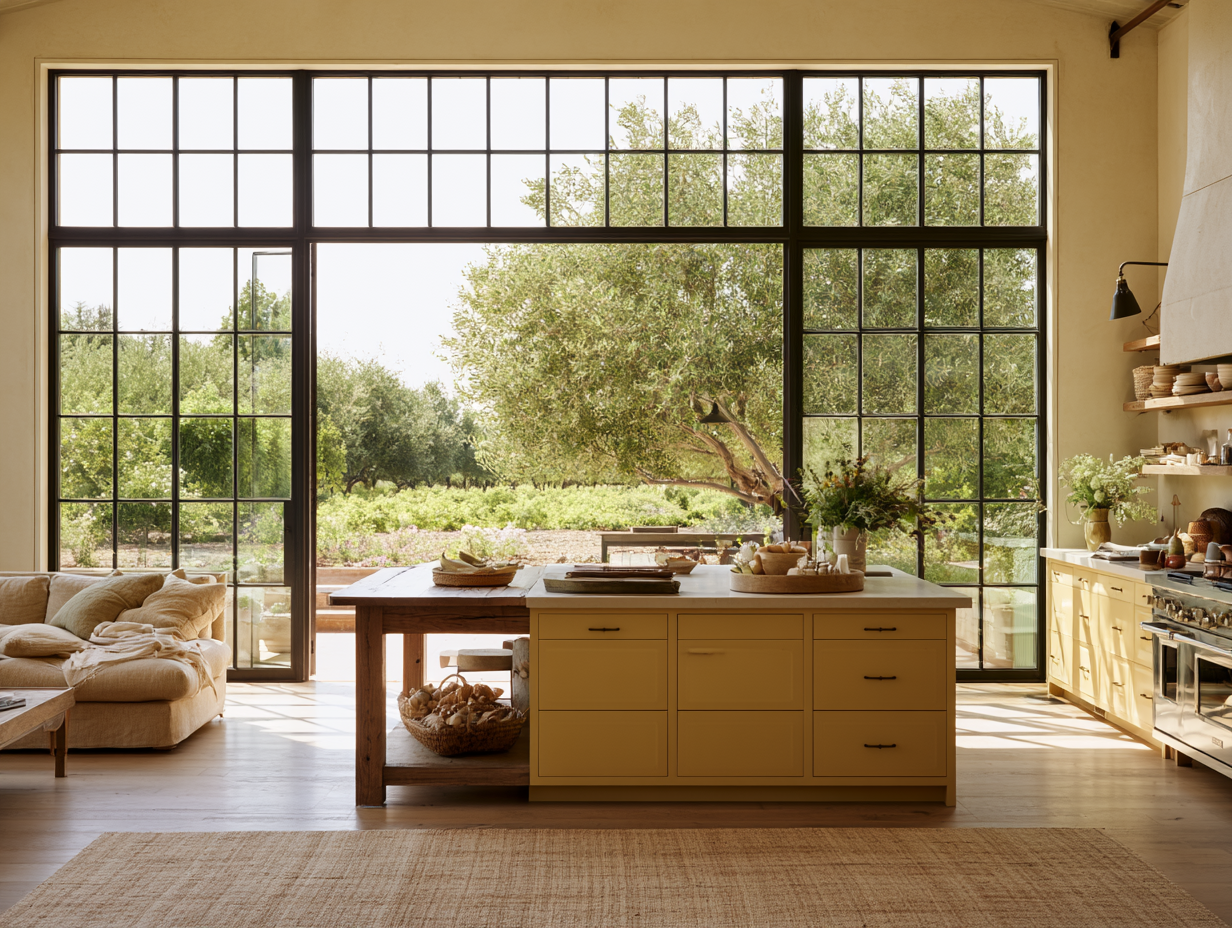
A yellow kitchen can benefit from oak floors, walnut shelves, a wood dining table, or even a simple butcher-block section on an island. Wood introduces texture and prevents painted cabinets from making the kitchen feel too flat.
Light oak creates a relaxed, airy effect. Medium brown woods make yellow feel grounded. Dark walnut can push the room toward a richer, more upscale look.
You do not need wood everywhere. Even a few carefully placed details can make yellow kitchen cabinets feel more connected to the rest of the home.
Choose Hardware That Adds Polish
Cabinet hardware may be small, but it can completely change the personality of yellow cabinetry.
Brass is an obvious partner because its warm tone relates naturally to yellow. However, the finish matters. Soft brushed or aged brass often feels more refined than extremely shiny gold.
Black hardware creates stronger contrast. It can work especially well with mustard or ochre cabinets and gives the kitchen a modern edge.
Nickel and stainless steel are another option when you want to cool the palette slightly.
Keep the hardware style fairly simple. Clean knobs, slim pulls, and understated handles allow the cabinet color to remain the focus.
Use Yellow in Different Amounts
Loving yellow does not mean every cabinet has to be yellow.
In fact, one of the easiest ways to create a sophisticated kitchen is to limit where the color appears.
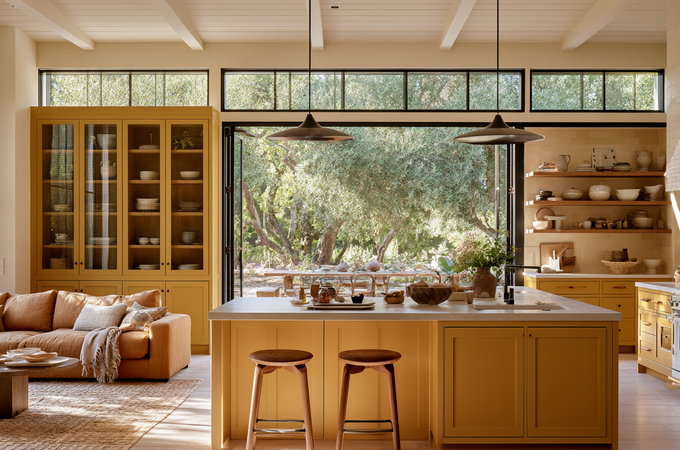
You could use yellow on the lower cabinets while keeping the upper cabinets neutral. Another option is a yellow island surrounded by wood or cream cabinetry. A wall of yellow cabinets can also create a strong focal point without filling the entire room with color.
This approach is especially useful in smaller kitchens.
A controlled section of yellow gives you the personality of colorful cabinetry while leaving enough visual breathing room around it.
Keep the Backsplash Quiet
A backsplash sits directly next to the cabinets, so its design has a major effect on how yellow feels.
Simple materials are usually the safest choice. Cream tile, handmade off-white tile, pale stone, or a backsplash that continues the countertop material can all work beautifully.
Texture can provide interest without adding another strong color.
For instance, slightly uneven handmade tiles can reflect light in different ways. They add character while still allowing yellow kitchen cabinets to remain dominant.
If you prefer patterned tile, choose a restrained design with colors that already appear elsewhere in the room.
Consider the Countertop Carefully
Yellow changes depending on what sits beside it.
Warm white quartz can make pale yellow cabinets feel fresh and clean. Marble or marble-look surfaces introduce elegant movement. Soapstone or another dark surface can create a dramatic contrast with softer yellow cabinetry.
Natural-looking materials tend to work particularly well because their subtle variation balances the solid painted finish of cabinets.
Before committing, place countertop samples beside the actual cabinet color. Look at them during the morning, afternoon, and evening. A pairing that looks perfect under showroom lights may feel very different in your home.
Lighting Can Change Everything
Yellow reacts strongly to light.
A warm yellow may become much brighter in a sunny south-facing kitchen. In a darker room, the same shade may appear deeper and more muted.
Artificial lighting matters too. Very warm bulbs can make yellow cabinetry look more orange, while cooler lighting may make certain shades appear slightly green.
This is why paint samples are so important.
Test a large sample vertically rather than looking at a tiny color chip. Leave it in the kitchen for several days and check it under natural and artificial light.
A little patience at this stage can prevent an expensive color mistake.
Add Contrast Through Small Details
A sophisticated yellow kitchen does not have to be completely soft and neutral.
Small dark details can give the room structure.
Black window frames, dark counter stools, charcoal pendant lights, or a deep stone countertop can create visual anchors. These elements help define the space and prevent a pale yellow kitchen from feeling washed out.
The important word is small.
You want enough contrast to sharpen the design, but not so much that the kitchen becomes divided into competing blocks of color.
Avoid Making Everything Match
Once you choose yellow cabinets, it can be tempting to repeat the exact color throughout the kitchen.
Yellow chairs. Yellow dishes. Yellow towels. Yellow artwork.
That can quickly become too much.
Instead, think about colors that relate to yellow without copying it. Olive green, muted blue, rust, warm brown, cream, and charcoal can all sit comfortably beside many yellow shades.
Repeating the cabinet color once or twice in tiny details is enough. The kitchen will feel more collected when every object does not perfectly match.
Give the Design Room to Breathe
One of the biggest secrets behind successful yellow kitchen cabinets is empty space.
Not every wall needs shelving. Not every countertop needs decoration. Not every corner needs another color.
Clear surfaces and simple shapes help a bold cabinet color feel purposeful rather than chaotic. They also make the kitchen easier to live in.
This is especially important with open shelving. If yellow cabinetry is already providing plenty of personality, keep displayed items simple. White ceramics, clear glassware, wood boards, and a few plants can provide texture without clutter.
Yellow Can Be Timeless When the Design Is Thoughtful
Color trends come and go, but that does not mean yellow cabinets automatically have a short life.
The shade and surrounding materials matter more than whether yellow happens to be fashionable at the moment.
A muted yellow paired with natural wood, stone, simple hardware, and classic cabinet shapes can age beautifully. These materials give the color a foundation that feels established rather than trendy.
That is also why it helps to avoid stacking too many current trends into one room. Yellow cabinets already provide character. They do not need much help.
The Best Yellow Kitchens Know When to Stop
The difference between cheerful and overwhelming often comes down to restraint.
Choose a yellow with depth. Surround it with quieter colors. Introduce natural wood and stone. Use hardware to add definition. Pay attention to lighting. Most importantly, resist the urge to make every surface interesting.
Yellow kitchen cabinets can be bold without being loud. They can feel warm without becoming overly sweet and colorful without looking childish.
When everything around them is carefully balanced, yellow cabinets stop feeling like a risky design choice.
They simply feel like they belong.