Black Kitchen Cabinets Done Right How Designers Keep Them Bright and Modern
Black kitchen cabinets were once considered too bold for most homes. People worried they would make kitchens feel dark, small, or outdated. Today, designers are proving that black can be one of the most stylish and flexible cabinet colors you can choose.
When designed carefully, black kitchen cabinets look bright, modern, and surprisingly welcoming.
The secret is balance. Designers don’t just paint cabinets black and hope for the best. They use light, contrast, texture, and smart layout choices to keep the space feeling open and fresh.
This article breaks down exactly how professionals make black kitchen cabinets work—and how you can apply the same ideas in your own kitchen.
Why Black Kitchen Cabinets Are So Popular Right Now
Design trends often move in cycles. After years of all-white kitchens, many homeowners want something different. Black kitchen cabinets offer a bold change without feeling trendy or short-lived.
Black is a true neutral. It pairs easily with warm or cool colors, modern or traditional styles, and natural or man-made materials. This flexibility makes black cabinets appealing to both designers and homeowners.
Another reason black cabinets are popular is their sense of depth. White cabinets can sometimes feel flat. Black cabinets add contrast and structure, giving the kitchen a more designed and intentional look. They also tend to hide small marks and wear better than very light finishes, which makes them practical for busy households.
Choosing the Right Shade of Black for Your Kitchen
Not all black kitchen cabinets look the same. Some blacks lean warm, while others feel cool or slightly gray. This difference may seem small, but it has a big impact on how the kitchen feels.
Warm black shades often have brown or soft charcoal undertones. These work well with wood floors, warm metals, and natural stone. Cool blacks lean toward gray or blue undertones and pair nicely with stainless steel, concrete, and crisp white surfaces.
Designers almost always test cabinet samples in the actual kitchen space. Lighting, wall color, and nearby materials can change how black appears. A black that looks perfect in a showroom may feel too harsh or too soft once installed at home.
How Lighting Makes or Breaks Black Kitchen Cabinets
Lighting is the most important factor in keeping black kitchen cabinets from feeling dark or heavy. Designers rely on layered lighting to brighten the space from multiple angles.
Natural light is a huge advantage. Large windows, glass doors, or skylights help balance dark cabinetry. Even a small window can make a difference when paired with other light sources.
Artificial lighting is just as important. Recessed ceiling lights provide overall brightness. Under-cabinet lighting shines directly onto countertops, making work areas feel lighter and more open. Pendant lights over islands add both style and function.
Designers often choose light-colored or glass light fixtures so they don’t visually compete with black cabinets. The goal is to let light move freely through the space.
Pairing Black Cabinets with Light Countertops
One of the most common design strategies is pairing black kitchen cabinets with light countertops. This contrast keeps the kitchen from feeling closed in.
White or off-white countertops reflect light and create a clean break between dark cabinets and other surfaces. Quartz and marble are popular choices because their subtle veining adds movement and interest.
Light gray countertops offer a softer contrast while still keeping the space bright. Even light wood countertops can work when balanced with good lighting and other light elements.
Designers avoid pairing black cabinets with very dark countertops unless the kitchen is large and filled with natural light. Too much darkness in one area can make the space feel heavy.
Adding Warmth with Wood and Natural Materials
Black kitchen cabinets can feel cold if not balanced with warm materials. This is why designers often add wood elements to soften the look.
Light wood tones like oak or maple bring warmth and texture. These materials are commonly used for floors, open shelves, islands, or ceiling beams. Even small wood accents can make a big difference.
Natural stone backsplashes or countertops add texture and visual interest. Warm metals like brass, bronze, or gold cabinet hardware reflect light and add a subtle glow against black surfaces.
This mix of dark and warm materials creates a kitchen that feels both modern and comfortable.
Choosing the Best Cabinet Finish: Matte, Satin, or Gloss
The finish of black kitchen cabinets plays a major role in how they look and feel. Matte black finishes are popular for their soft, modern appearance. They absorb light, which helps hide fingerprints and small imperfections.
Glossy black cabinets reflect light and can make a kitchen feel brighter, especially in smaller spaces. However, they tend to show smudges more easily and can feel too shiny in some designs.
Many designers prefer satin finishes because they offer a balance between matte and gloss. Satin black cabinets reflect just enough light to stay lively without looking overly polished.
Using Black Cabinets in the Right Places
Designers don’t always use black kitchen cabinets everywhere. Strategic placement helps control how bold the color feels.
A popular approach is using black on lower cabinets while keeping upper cabinets light or open. This grounds the kitchen while keeping the upper area visually light.
Kitchen islands are another great place for black cabinets. A black island adds contrast and becomes a focal point without overwhelming the entire space.
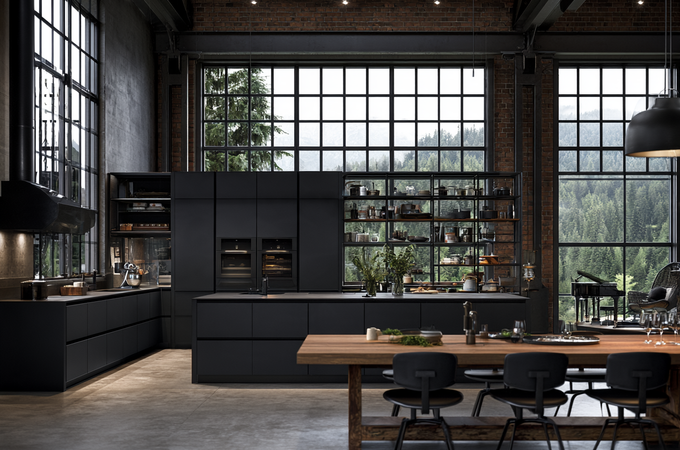
In larger kitchens with plenty of light, full black cabinetry can look stunning. In smaller kitchens, selective use usually works best.
Open Shelving and Glass Cabinets for Visual Balance
Open shelving is a designer favorite when working with black cabinets. It breaks up solid cabinet walls and creates breathing room.
Light wood or white open shelves help reflect light and soften the dark cabinetry. They also allow homeowners to display dishes, plants, or decorative items that add brightness.
Glass-front cabinets serve a similar purpose. They allow light to pass through and reduce the visual weight of black cabinets. Designers often place glass cabinets near windows or sinks to maximize light flow.
The Importance of the Right Backsplash
In kitchens with black cabinets, the backsplash becomes a key design feature. It helps tie the space together while adding light and texture.
White subway tile is a classic choice because it reflects light and provides clean contrast. Patterned tiles add personality without overwhelming the space when kept in light tones.
Stone or textured backsplashes add depth and prevent the kitchen from feeling flat. Designers usually avoid very dark backsplashes unless the kitchen has strong lighting and plenty of contrast elsewhere.
Flooring That Complements Black Kitchen Cabinets
Flooring plays a big role in how black cabinets feel. Light wood floors are one of the most popular options because they add warmth and balance.
Light tile floors also work well, especially in modern kitchens. They reflect light and help keep the space feeling open.
Darker floors can work too, but designers are careful. When both cabinets and floors are dark, the rest of the kitchen must include enough light surfaces and strong lighting to avoid a heavy look.
Keeping Black Kitchen Cabinets Clean and Looking New
Black kitchen cabinets are easier to maintain than many people expect. They hide stains and discoloration better than white cabinets, but dust and fingerprints can still show.
Designers recommend choosing finishes that resist fingerprints and using soft cloths for cleaning. Gentle cleaners help protect the surface and keep cabinets looking fresh.
Good lighting also helps cabinets look cleaner by reducing shadows that can highlight dust.
Black Kitchen Cabinets Across Different Design Styles
One reason designers love black cabinets is their ability to fit many styles.
In modern kitchens, black cabinets with flat doors and simple hardware create a sleek, clean look. In farmhouse or transitional kitchens, black cabinets paired with wood and classic hardware feel cozy yet updated.
In industrial kitchens, black cabinets blend naturally with metal, concrete, and exposed elements. They add depth without feeling out of place.
Common Mistakes to Avoid with Black Cabinets
One common mistake is not adding enough contrast. Without light countertops, backsplashes, or walls, black cabinets can feel overwhelming.
Another mistake is poor lighting. Even the best design will fail if the kitchen is too dim.
Finally, choosing black without considering undertones can lead to clashing materials. Testing samples and planning the full design prevents disappointment.
Why Designers Continue to Choose Black Kitchen Cabinets
Designers keep choosing black kitchen cabinets because they are timeless, flexible, and bold without being flashy. Black creates a strong foundation that adapts to changing trends and personal styles.
When balanced with light, warmth, and texture, black cabinets feel bright, modern, and intentional.
Final Thoughts: Making Black Kitchen Cabinets Work in Your Home
Black kitchen cabinets are no longer a risky design choice. With thoughtful planning, they can make a kitchen feel stylish, open, and welcoming.
The key is balance. Use light countertops, strong lighting, warm materials, and smart layout choices to support the dark color.
When done right, black kitchen cabinets don’t darken a space—they elevate it.